
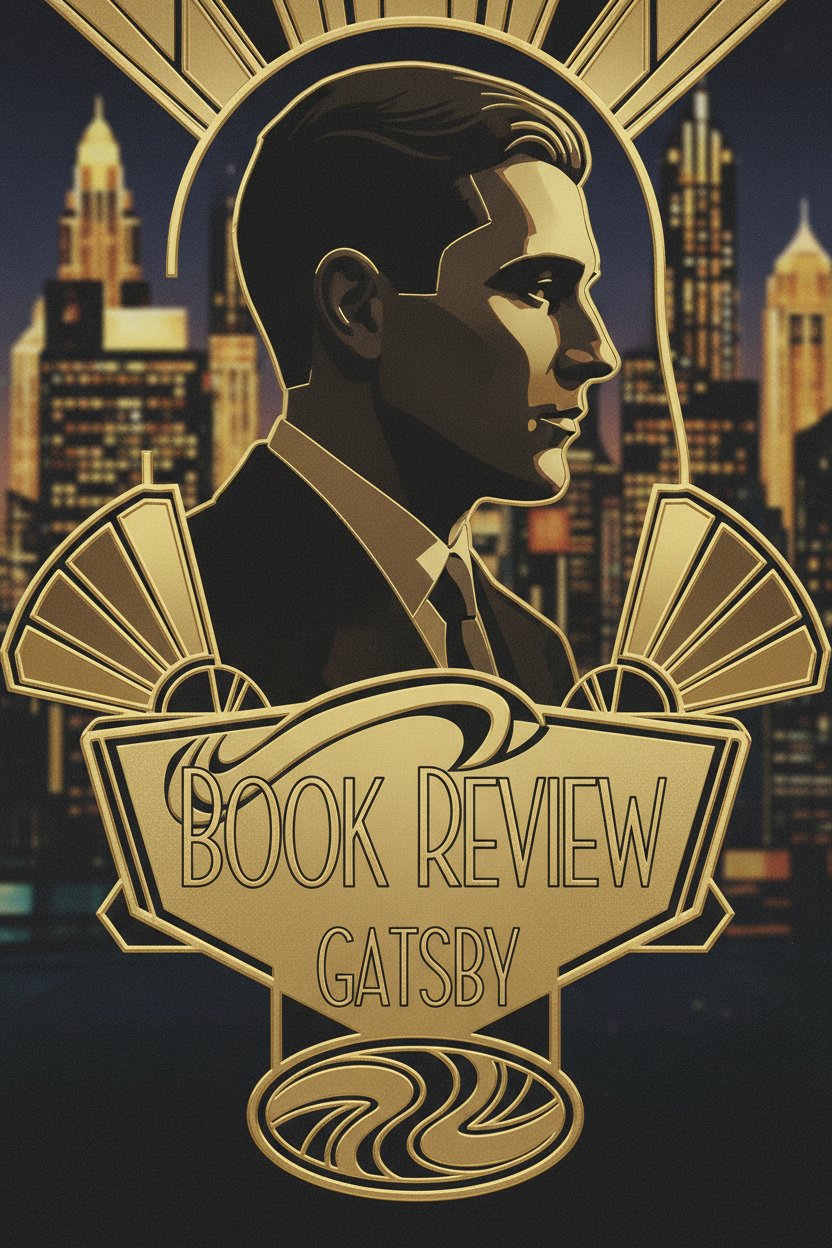
Introduction: A Love Story Beyond Comparison
In the realm of novels claiming to be the greatest love story of all time, only “The Great Gatsby” can genuinely lay claim to that title. While set against the backdrop of the dazzling 1920s in America, this novel transcends its romantic narrative, delving into deeper themes that resonate long after the final page is turned.
A Glimpse into the Roaring Twenties
Narrated by Nick Carraway, a war veteran and member of an affluent family, “The Great Gatsby” unfolds in East Egg, a slightly less opulent area compared to West Egg, where Gatsby’s lavish mansion stands. Gatsby, a man of immense wealth, hosts extravagant parties that attract the entire town. Yet, he remains an enigma, never fully known to anyone. Behind his facade lies a dark secret, an insatiable desire that will ultimately lead to his downfall.
Beyond a Love Story: Reflections on Hollow Lives
While drawing parallels to “Romeo and Juliet,” I believe “The Great Gatsby” surpasses the confines of a simple love story. It serves as a poignant reflection on the emptiness of a life consumed by leisure. Both tales grapple with the desire to control time: Juliet yearns to prolong her present, aware of the bleak future awaiting her and Romeo, while Gatsby seeks to recreate a glorious past, yearning for a beautiful future. Gatsby’s famous line, “Can’t change the past? Why, of course, you can,” struck a chord with me, as I’ve often wished for a return to the past, yearning for a better time.
Poetic Prose and Flawed Characters
Fitzgerald’s writing exudes a poetic quality akin to a symphony of literary brilliance. Each sentence washes over the reader with its lush descriptions, evoking a powerful emotional response. However, unlike “Romeo and Juliet,” the characters in “The Great Gatsby” are deeply flawed and challenging to sympathize with. Yet, this is where the beauty of the book lies. It’s natural to despise Daisy Buchanan and Tom and even develop a hint of disillusionment with Gatsby, who demands more than Daisy’s admission of love—he requires her to confess that she never loved her husband, Tom, throughout their five-year marriage. Nevertheless, Gatsby, in my eyes, remains great until the very end.
The Irony of the Idle Rich
Ironically, the idle wealthy survive the narrative, a fact that further fuels the reader’s indignation regarding the world’s cruelty and injustice. The rich continue their carefree existence, as that is the essence of the American dream, right? Yet Fitzgerald exposes the horrors of such carelessness, depicting them as individuals who “smashed up things and creatures and then retreated back into their money and vast carelessness.” Remarkably, Tom and Daisy aren’t malicious in their carelessness—it is simply their nature. And therein lies the tragedy. They lack concern for their daughter, Myrtle, Gatsby, and even each other. Their incapacity to care distinguishes “The Great Gatsby” from “Romeo and Juliet,” where the lovers sacrifice themselves, leading to the healing of Verona. In Fitzgerald’s masterpiece, tragedy leaves nothing unbroken.
Chasing Dreams and the Unworthy Pursuit
While some may find “The Great Gatsby” disheartening due to the protagonists’ failure to achieve their aspirations, Fitzgerald’s core message isn’t that dreams lead to despair. Instead, he emphasizes that pursuing an unworthy dream inevitably leads to tragedy.