
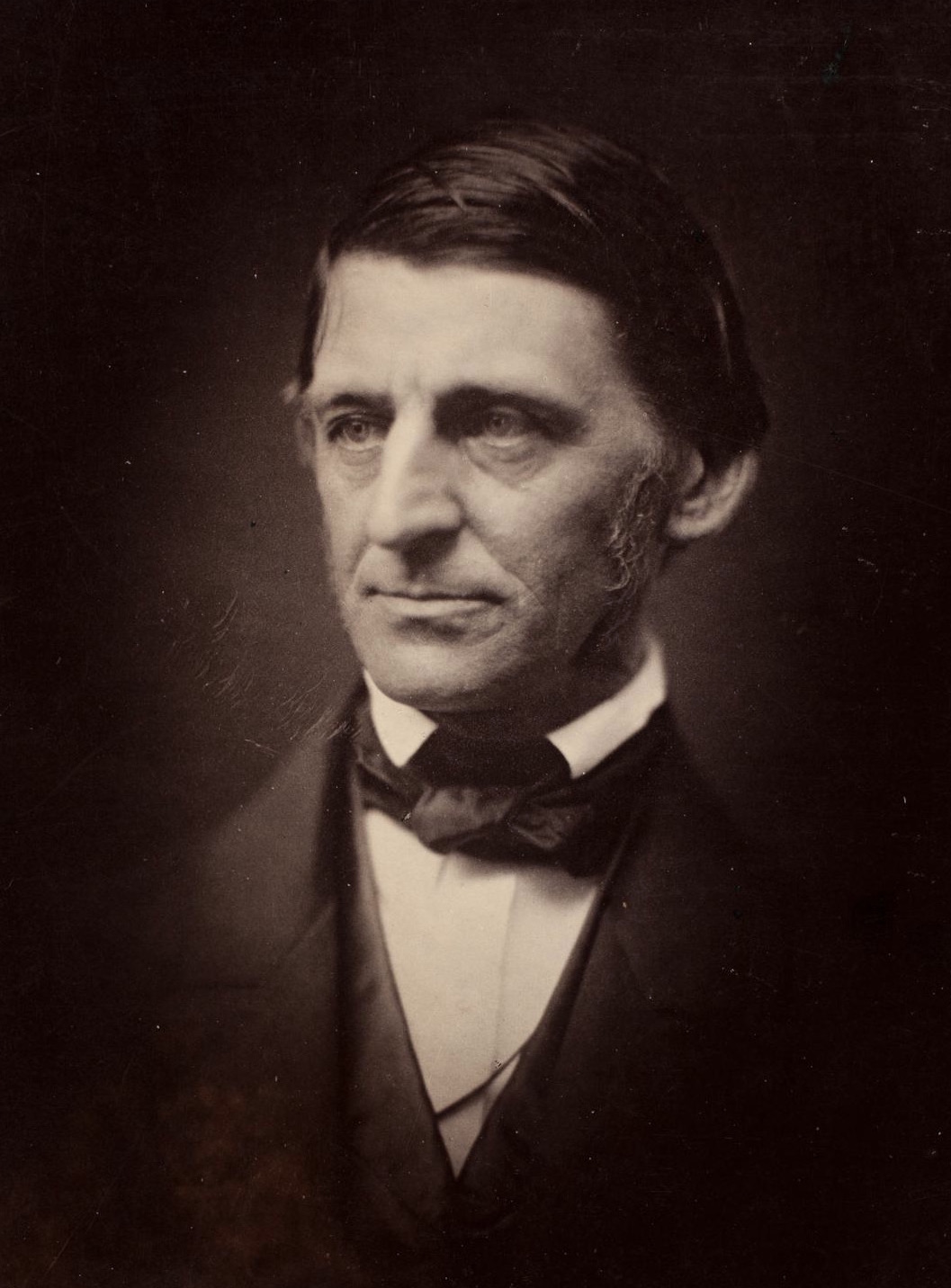
Ralph Waldo Emerson never felt like someone born to tear up the script of his culture. In so many ways, his early life reads as entirely ordinary—rooted in New England, shaped by Puritan tradition, beset by the quiet struggles of a family determined to preserve dignity during hard times. But sometimes the most formidable change-makers don’t arrive with a crash; they appear with an unsettling quietness, an unwillingness to simply accept the world as it is. That’s how I see Emerson: reluctant rebel, eventual iconoclast, the man who urged America to stop copying Europe and to look, instead, at its own soil, sky, and soul.
His revolution was not the work of one wild moment, but the patient fire of a lifetime. Each trial, each loss, built the strange kind of resolve that shaped what people now call the “father of American literature.” When Emerson wrote, “We have listened too long…to the Courtly muses of Europe,” I sense the burden he carried—how he stood between the exhausted inheritance of the past and the wild possibility of something new. This post is not a simple tribute but an honest look at how a life spent asking uncomfortable questions can, over time, create something bigger than any life alone.
The Roots: Emerson’s Early Life
It’s a strange thing to look back at how Emerson’s story starts. Born in Boston in 1803, he entered a world mapped out for him by the stern beliefs of Puritan ministers and the persistent expectations of family and city. His father, a respected preacher, died before Emerson was ten, leaving his mother to manage a house crowded with children and the constant uncertainty of rent. She coped the only way she could—by taking in boarders, hoping to scrape enough together to keep her children on track.
Yet, she somehow sent her son to Harvard at age 14. That milestone alone feels significant: the steady climb from sorrow to scholarship, from hand-me-down books to the libraries of privilege. Emerson joined Harvard Divinity School in 1825, following a line so straight it was almost invisible. He became, for a time, exactly what everyone needed—a promising young minister carrying forward the ideals of his ancestors.
Here’s a quick timeline that traces this trajectory:
- 1803: Ralph Waldo Emerson is born in Boston.
- 1811: His father dies, leaving his family in a precarious position.
- 1817: Emerson begins studies at Harvard.
- 1825: He enrolls at Harvard Divinity School.
- 1829: Ordained as a minister and marries Ellen Tucker.
Looking at it this way, his departure from the expected path starts to feel even more surprising.
Mary Moody Emerson: The Quiet Spark
Every story like this needs its catalyst, and for Emerson, that role belonged to his aunt, Mary Moody Emerson. Self-taught but voracious in her reading, she modeled a strange kind of wild freedom—blending religion, literature, and an instinct to revere nature. Mary’s letters show a fierce will, sharpened by isolation but sweetened by the awe she felt for the world.
She read everything, from Shakespeare to the English Romantics, and built her own philosophy, fusing piety with the natural world. What she handed down to her nephew was not a list of facts, but a permission slip to wonder. When I imagine Emerson as the careful youth, I see Mary’s questions echoing quietly, a counterweight to the hammered-in ideas of the pulpit.
Looking for a deeper window into the Emerson family’s moral code, I find myself returning again and again to Mary’s stubborn devotion to truth, her resistance to easy faith, and her delight in the unpredictable.
Doubt, Loss, and the Limits of Faith
As a young minister, Emerson appeared steady enough. He married Ellen Tucker in 1829, just as he took his position behind the pulpit, but in a move that I think signals the beginning of his transformation, he found himself at odds with the stiff formality of New England orthodoxy. It’s not hard for me to imagine the silent frustration—his sense that the faith he inherited felt too small for the questions swirling inside him.
Ellen’s death from tuberculosis two years into their marriage shattered whatever comfort he had tried to make for himself. In that grief, something shifted. Emerson left the church. I see this not as a break with faith itself, but with a version of faith that had come to feel restrictive, refusing to allow for the wildness and suffering of real life.
He once wrote of that struggle, “Our religion, we have not chosen, but society has chosen for us…” The unrest was growing.
Emerson Abroad: Two Revelations
Emerson’s real genesis as a thinker didn’t begin in a study or a pulpit, but during a series of disorienting months abroad. In December 1832, still raw from loss and doubt, he sailed for Europe.
Nature as an Inner Force
His time in Paris marked him forever. Wandering through the Jardin des Plantes—something between a zoo and a scientific garden—he felt a surge of empathy for every living creature, from the centipede to the eagle. He scribbled in his journal:
“I feel the centipede in me, the Cayman, carp, eagle and Fox…I am moved by strange sympathies. I say continually: I will be a naturalist.”
Nature wasn’t something outside or above him; it was inside, in all its oddity and urgency. He understood, for the first time, that our “higher” qualities are inseparable from the wildness lurking underneath.
Literary Giants: Ordinary After All
Soon after, Emerson met the English poets who had reshaped his aunt’s thinking—Samuel Taylor Coleridge and William Wordsworth. What struck him right away was their ordinariness. These were not the giants he expected. From that, he drew a jolting lesson: “If great men can be so ordinary, why shouldn’t ordinary men be great?”
He would later write,
“Meek young men grow up in libraries, believing it their duty, to accept the views which Cicero, Locke, Bacon have given. Forgetful that Cicero, Locke and Bacon were only young men in libraries when they wrote these books.”
Reflecting honestly on the journey, I’m struck by how Emerson’s despair, far from destroying him, set the terms for an entirely new vision—one that put the self at the center, not because of arrogance, but because of possibility.
So, on returning home, Emerson brought back two core convictions:
- The unity of man and nature—nature flows through everything, including us, even in our strangeness and sorrow.
- The idea that each person, however humble, contains the seeds of greatness, stifled only by convention and fear.
For a more detailed biography that traces these moments, I often turn to resources like the Encyclopedia Britannica’s overview of Emerson [https://www.britannica.com/biography/Ralph-Waldo-Emerson], which lays out the facts with admirable clarity.
Emerson’s New Role: Public Thinker and Private Turmoil
After Europe, the life of Emerson moved quickly into new territory. He became a professional lecturer, traveling to towns across New England speaking about nature, literature, and the radical freedom waiting within every soul. Publicly, he looked settled—remarried, several children, presenting to the world the image of the model family man.
Privately, he churned with questions. His journals from this period are scattered with doubts, fierce ambitions, and the kind of stubborn hope that refuses to die. For me, this split between public and private self is at the very core of Emerson’s legacy.
When he published Nature in 1836, he made a case for the breaking of old ties. He demanded a fresh start for American thought—a refusal to keep building upon the tombs of old thinkers.
He wrote, in lines that never lose their sting:
“Our age is retrospective, it builds the sepulchres of the fathers. It writes biographies, histories and criticism. The foregoing generations beheld God and nature face to face; we, through their eyes. Why should not we also enjoy an original relation to the universe?”
That last question still rings true for anyone who’s ever wondered if their own instincts might matter as much as the inherited wisdom of the past.
The Heart of Emerson’s Philosophy: Self-Reliance
If there’s one thread running through the life of Emerson, it’s his insistence on individual worth—and the constant trap of letting tradition dictate who we become.
He argued that history, religion, and society act as forms of invisible bondage, holding back authentic life. His critique was blunt: “History is an impertinence and an injury; Our religion, we have not chosen, but society has chosen for us… Society everywhere is in conspiracy against the manhood of every one of its members.”
He wanted, desperately, for people to shed these layers:
- To cast off history as a weight, not a guide.
- To stop living out religion that others have foisted on them.
- To pull away from society’s crushing pressure to conform.
His remedy was simple to write, terrifying to practice: “Live from within, trusting nothing but our own intuitions.” He did not see this as selfishness but as surrender—a surrender to a force that is more than merely personal whim.
He summed it up with rare bluntness:
“Nothing is at last sacred but the integrity of your own mind.”
Anyone who has ever struggled with self-trust will recognize both the allure and the difficulty of this command.
If you want to sink into Emerson’s actual words from Self-Reliance, a visit to the Stanford Encyclopedia of Philosophy’s Emerson entry [https://plato.stanford.edu/entries/emerson/] goes deep into the complexities and wonders of his thinking.
Pantheism and the Transparent Eyeball: God in the Ordinary
Emerson’s brand of spirituality is often described as “pantheism”—the belief that God exists in every part of the universe, from the smallest pebble to the largest stars. But he didn’t stop there; for him, the divine spark exists inside each of us, waiting to be recognized whenever our false selves fall away.
He put it like this: “The individual,” Emerson said, “is a God in ruins.” But unlike voices of self-indulgence, he meant that only by stripping away old habits and stale custom could we find the genuine will that belongs to the divine.
Perhaps the most famous image comes from one winter walk, which he describes so vividly I can almost feel the cold air myself:
“Crossing a bare common, in snow puddles at twilight under a clouded sky, without having in my thoughts any occurrence of special good fortune, I’ve enjoyed a perfect exhilaration. I am glad to the brink of fear…I become a transparent eyeball…I am nothing…I see all. The currents of the universal being circulate through me…I am part or particle of God!”
He didn’t need mountains or thunder to touch the infinite. Ordinary life, rightly attended to, was miracle enough. When he wrote, “There is no object…so foul that intense light will not make it beautiful,” he asked readers to see poetry even in what most would turn away from.
If you’re still pondering what “pantheism” means, or how it fits in the larger tradition of American thought, the Wikipedia page on Ralph Waldo Emerson [https://en.wikipedia.org/wiki/Ralph_Waldo_Emerson] gives a straightforward overview.
What Emerson Unleashed: The Legacy
From these hard-won insights, a movement grew: Transcendentalism. Emerson gave permission to writers, thinkers, and ordinary people alike to value the world as it is, not as it was told to them, and to value themselves as they are.
He inspired others—not by issuing a set of doctrines, but by demonstrating that a life spent questioning, grieving, and seeking could itself become art. Here are just a few who felt his influence (and whose work, in turn, reshaped American letters):
- Henry David Thoreau, whose account of living at Walden Pond became a meditation on nature, society, and solitude.
- Walt Whitman, who famously said, “I was simmering, simmering, simmering…Emerson brought me to a boil.”
- Emily Dickinson, who saw meaning in the pause of a fly at the edge of death.
- Herman Melville, who turned a whaling voyage into a dark fable about defiance, fate, and the American will.
Later critics, like Harold Bloom, credited Emerson with beginning the American poetic tradition that fostered voices as diverse as Robert Frost, Wallace Stevens, and John Ashbery. Bloom admired Emerson as the true origin of poetry that looked inward, trusted the moment, and never let the past become a cage.
Emerson put it himself with characteristic boldness: “I unsettle all things…no facts are to me sacred, none are profane…I simply experiment, an endless seeker with no past at my back.”
If this spirit appeals to you, it might be a good idea to look deeper into related classic American literature discussions [https://www.britannica.com/biography/Ralph-Waldo-Emerson]—there’s so much more to uncover when you dig into these primary voices and their modern interpreters.
A Note on Pronunciation
Before I finish, I want to share a small (and sometimes embarrassing) detail. Emerson’s middle name, “Waldo,” sometimes trips people up. If you’re unsure, a safe bet is to pronounce it with a strong, clear “a” (like “wall-doh”). In German, it’s different—but for most readers of American literature, that’s close enough.
Closing Thoughts: Why Emerson Still Matters
I’m not sure I’ll ever stop feeling the tension that Emerson knew so well—the struggle between honoring the past and daring to ignore it. The lesson, I think, is not to throw away all guidance, but to notice when your own mind, experience, and grief begin to demand something more. Emerson’s journey wasn’t simple, and it wasn’t safe. But he proved, again and again, that the courage to see for yourself (and to live from within) is perhaps the only path worth taking.
By tracing the life of Emerson, I’ve become convinced that genuine originality isn’t the result of brilliance alone, but of honesty—an honest acceptance of nature, sorrow, and your own errant thoughts. Maybe what we most need isn’t a teacher who hands over truths, but a companion unafraid to break the silence, to say: Look again. The world is right here. So are you.
If you would like a more scholarly take on Emerson’s philosophy or a wide overview of his influence, academic resources like the Stanford Encyclopedia of Philosophy’s Emerson entry [https://plato.stanford.edu/entries/emerson/] are there to help you explore further.
His legacy—born from doubt and resolve—still shapes how we think about ourselves and what it means to be free.