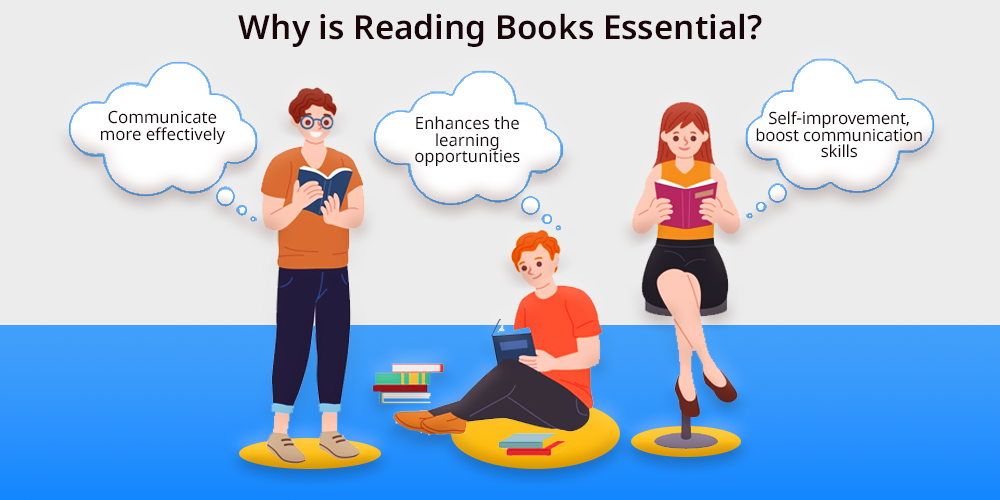
In a world overflowing with notifications, social media feeds, and endless streaming services, it can feel like sitting down with a book is old-fashioned. Yet, despite our fast-paced digital lives, reading remains one of the most powerful habits we can develop. From sharpening the mind to strengthening emotional resilience, the benefits of reading are well-documented by psychologists, educators, and even CEOs of Fortune 500 companies.
Whether you prefer novels, biographies, self-help, or even articles like this one, the act of reading goes far beyond entertainment. Reading is not just about absorbing information—it’s about reshaping the way we think, feel, and connect with the world.
In this article, we’ll dive deep into the five life-changing benefits of reading, backed by research, real-life examples, and practical insights. By the end, you’ll see why building a consistent reading habit is one of the best investments you can make in yourself.
Benefit #1: Reading Improves Mental Stimulation and Brain Health
The Brain as a Muscle
Just as lifting weights strengthens your muscles, reading strengthens your brain. Neuroscientists have found that reading stimulates complex neural networks, improving brain connectivity. A study published in Neurology found that mentally engaging activities like reading can slow cognitive decline and even reduce the risk of Alzheimer’s disease.
When you read, your brain processes language, creates mental images, recalls related knowledge, and anticipates what comes next. This level of stimulation keeps your mind sharp and flexible.
Memory and Concentration Boost
Every time you pick up a book, you’re giving your brain a workout. Think about what happens when you follow a novel:
- You remember characters, plotlines, and subplots.
- You visualize settings and events.
- You recall earlier chapters to make sense of new developments.
This strengthens working memory and enhances concentration. Unlike scrolling through social media, which scatters attention, reading demands focus. Over time, this can rewire your brain for better attention span—a priceless skill in today’s distraction-heavy world.
Practical Tip
To maximize the brain benefits of reading, try reading at least 20–30 minutes daily. Choose books that challenge you: literary fiction, philosophy, or even historical nonfiction. Just like physical workouts, the more diverse the “mental exercises,” the better the results.
Benefit #2: Reading Reduces Stress and Supports Mental Health
Escaping Into Another World
One of the most profound benefits of reading is its ability to reduce stress. When you immerse yourself in a well-written story, you temporarily step outside your own worries. This escape offers the same relief as meditation or a calming walk.
In fact, a 2009 study at the University of Sussex found that reading can lower stress levels by up to 68%, outperforming music, tea, and even walking.
Emotional Healing Through Books
Known as bibliotherapy, reading has long been used as a therapeutic tool. Self-help books can provide strategies to cope with anxiety or depression, while novels allow readers to process emotions indirectly through characters. By seeing fictional characters face challenges, we gain perspective on our own struggles.
For example, someone dealing with grief might find solace in Joan Didion’s The Year of Magical Thinking, while someone wrestling with identity could find clarity in James Baldwin’s Giovanni’s Room.
Reading Before Bed for Better Sleep
Reading a physical book before bed signals to your body that it’s time to unwind, especially if you avoid screens. This can help regulate your sleep cycle, reduce insomnia, and ensure deeper rest. Unlike doomscrolling on your phone, which stimulates the brain with blue light, reading calms the nervous system.
Practical Tip
If stress is overwhelming, keep a “comfort read” on hand—something you can revisit again and again. Many readers find classics, fantasy novels, or poetry collections to be particularly soothing.
Benefit #3: Reading Expands Knowledge and Vocabulary
Knowledge is Power
The most obvious benefit of reading is knowledge acquisition. Every page you turn introduces you to new ideas, cultures, histories, and perspectives. Whether it’s learning about ancient Rome in Mary Beard’s SPQR or modern leadership strategies in Simon Sinek’s Leaders Eat Last, each book enriches your worldview.
Unlike passive media consumption, reading requires active engagement. This means the knowledge you gain is more likely to stick and shape your decisions.
Vocabulary Growth and Communication Skills
Reading is one of the most effective ways to expand your vocabulary. Studies show that individuals who read regularly are exposed to 50% more words than non-readers. A stronger vocabulary not only helps in professional settings—like writing reports or giving presentations—but also in personal relationships, allowing you to express yourself with clarity and confidence.
Even standardized tests like the SAT, GRE, and LSAT correlate higher scores with frequent reading habits.
The Ripple Effect of Lifelong Learning
By reading across genres and subjects, you develop what psychologists call cognitive flexibility—the ability to adapt your thinking across contexts. This skill is essential in today’s world, where industries evolve quickly, and adaptability is the key to success.
Practical Tip
To expand knowledge effectively, keep a balance between fiction and nonfiction. Fiction enhances empathy and imagination, while nonfiction builds concrete knowledge and expertise.
Benefit #4: Reading Strengthens Empathy and Emotional Intelligence
Walking in Someone Else’s Shoes
When you read a novel, you don’t just follow a story—you live inside another person’s world. Literary fiction, in particular, has been shown to improve empathy. A 2013 study in Science revealed that readers of literary fiction scored higher on tests of emotional intelligence, specifically in understanding others’ thoughts and feelings.
For example, reading Toni Morrison’s Beloved allows us to confront the legacy of slavery through the eyes of its characters. Similarly, Khaled Hosseini’s The Kite Runner lets us experience Afghan history and culture through deeply personal narratives.
Building Emotional Intelligence
By repeatedly engaging with characters’ inner lives, readers practice recognizing emotions, motives, and moral dilemmas. This translates into better real-world relationships. People who read regularly are often more compassionate, tolerant, and understanding in social interactions.
Diversity and Representation
Reading diverse authors also exposes us to experiences we might never encounter firsthand. Books written by authors from different cultural, racial, or gender backgrounds expand our sense of humanity. They remind us that while people may live differently, they share universal struggles and joys.
Practical Tip
To strengthen empathy, seek out books outside your comfort zone. Try reading translated works, novels by marginalized authors, or memoirs that challenge your worldview.
Benefit #5: Reading Fuels Creativity and Personal Growth
Creativity Through Imagination
Reading isn’t just about absorbing information—it’s about sparking new ideas. When you read, your brain fills in the gaps: imagining landscapes, hearing characters’ voices, and visualizing action. This active participation makes reading a creativity engine.
Many famous innovators credit books as their greatest source of inspiration. Steve Jobs was heavily influenced by William Blake and Eastern philosophy, while Elon Musk often cites his love of science fiction as a catalyst for his vision of space exploration.
Personal Growth and Self-Reflection
Books have the power to act as mirrors and windows:
- Mirrors reflect our own lives back at us, allowing us to better understand ourselves.
- Windows open views into different possibilities, lifestyles, and futures.
This dual role helps us reflect on our goals, values, and identity, making reading a powerful tool for personal development.
Reading as a Source of Motivation
Self-improvement books, memoirs of successful people, and even spiritual texts often become turning points in people’s lives. For example, Viktor Frankl’s Man’s Search for Meaning continues to inspire readers worldwide with its lessons on resilience and purpose.
Practical Tip
If you’re looking to boost creativity, consider keeping a reading journal. Write down quotes that inspire you, ideas sparked by passages, and reflections on how a book changes your perspective. Over time, this journal becomes a treasure trove of creative fuel.
How to Build a Reading Habit That Lasts
Knowing the benefits of reading is only half the battle. The real challenge lies in creating a sustainable reading habit. Here are some actionable tips:
- Set a daily goal – Start with 10–20 minutes and gradually increase.
- Carry a book everywhere – Digital or physical, always have something to read.
- Use reading apps – Tools like Kindle, Libby, or Audible make it easy to read or listen on the go.
- Replace screen time – Swap 15 minutes of scrolling for 15 minutes of reading.
- Join a community – Book clubs or online forums create accountability and discussion.
Conclusion: Reading as a Lifelong Superpower
Reading is more than a pastime—it’s a superpower. It stimulates the brain, reduces stress, builds knowledge, enhances empathy, and sparks creativity. In a time when distractions are endless, choosing to read is a radical act of self-care and self-improvement.
The beauty of reading lies in its accessibility: all you need is a book, some time, and a willingness to immerse yourself. Whether you’re trying to boost your career, improve your mental health, or simply enjoy a great story, reading will always deliver.
So the next time you’re tempted to binge another show or scroll endlessly, remember: a single book could change your mind, your life, and maybe even the world.