
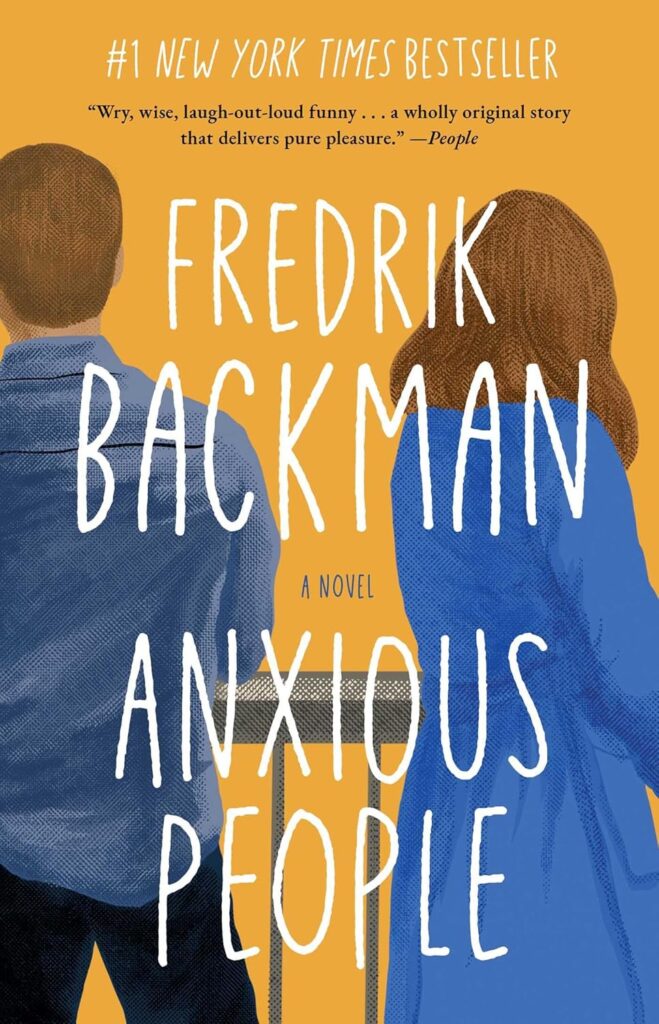
Sometimes a book leaves me almost breathless with recognition, which is exactly how I felt reading “Anxious People” by Fredrik Backman. The story’s premise—a failed bank robbery that spirals into a hostage situation—becomes much more than plot; it’s a lens for peeling back the everyday masks people wear. Backman’s unique style blends humor with honesty, presenting each character’s backstory with such empathy that I found myself caring about even the smallest details of their lives.
His writing doesn’t shy away from the messy places where anxiety, isolation, and hope overlap, sometimes in the span of a single page. What struck me was the frankness with which he addresses mental health and social expectations, not as abstract ideas but as struggles that shape the way we move through the world (I see the threads connecting these characters every time I reflect on books that examine vulnerability and connection). Each chapter holds up a mirror to the reader’s own longings, mistakes, and small hopes—showing clearly why this novel feels both timely and necessary.
As I think back, “Anxious People” doesn’t just ask what went wrong or right in a day’s events. It questions what we owe to one another in a society full of fear and quiet courage. This post is an honest look at why Backman’s novel hit so close to home and why its themes have real weight far beyond fiction.
Table of Contents
Plot Overview and Narrative Structure
“Anxious People” by Fredrik Backman doesn’t move in a straight line, at least not the way most stories do. Instead, the novel feels like a carefully shuffled deck—each card holding its own memory, secret, or regret. I noticed early on that Backman steers clear of keeping the reader comfortable or giving out information all at once. Instead, he weaves together timelines and character histories, slowly tightening the thread that links everyone together. That approach doesn’t just build suspense, it quietly pulls the reader deeper—into empathy, confusion, and, eventually, clarity about human connection and vulnerability.
Unraveling the Puzzle: Narrative Techniques in Anxious People
 Photo by Ron Lach
Backman shapes “Anxious People” using an array of distinctive narrative devices. The novel opens with a police investigation, which repeats in different forms throughout the book. In doing so, the author sets up a classic puzzle—what happened during the hostage situation, and how does each character fit in? But unlike typical crime stories or whodunits, the focus here shifts rapidly from the actual event to the emotional aftermath.
The police interrogations act as the story’s backbone. Each interview peels away a new layer of each hostage’s personality, fears, and truths. As I read, it became clear how skillfully Backman uses these scenes not just to build suspense, but to make every character’s anxiety and pain feel honest. A witness might recall something trivial or outright odd; those pieces, scattered throughout, invite the reader to start forming the connections for themselves. For me, each answer led to new questions about what motivates us, or why people sometimes hide the worst (or best) parts of themselves.
Layered backstories are another signature move. Backman doesn’t just tell us who the characters are now—he circles back to show how they became that way, tracing their choices and mistakes. These personal histories emerge not in long expository dumps, but through dialogue, fragments of memory, and unexpected confessions. I found myself revisiting earlier chapters, seeing how even the most random details end up mattering to the group dynamic and the plot’s slow reveal. If you’re curious about broader trends in storytelling, you might find it helpful to read about classic storytelling techniques that mirror some of Backman’s methods.
What surprised me most were the narrative twists—not the shocking turns you get in a thriller, but moments where the story subverts expectation. A hostage who seems hapless turns out to be quietly brave; characters with little in common shape each other’s fate in profound, ordinary ways. Backman uses these reversals to remind us that people are never one thing, and that empathy often grows in places we don’t expect.
The result feels less like reading a chronology and more like piecing together a giant jigsaw puzzle. Every little plot point is a corner or edge that only finds its full shape when looked at in the context of the whole. This patchwork structure builds suspense without cheap tricks; the tension comes from waiting to see how, or if, these strangers might understand and help each other. For even more insight, I recommend checking out Anxious People by Fredrik Backman | Summary, Analysis, which explores the texture of Backman’s narrative approach.
It’s this narrative style—part confessional, part detective story, part character study—that turns anxious people into something far more than a hostage story. The impact isn’t just plot-driven, it’s deeply human, as if the book’s true mystery is not “what happened,” but “why do people carry so much pain, and what brings relief?” That, to me, is what keeps the reader glued to every page.
Key Themes: Mental Health, Empathy, and Societal Pressures
Stepping into the world of “anxious people fredrik backman,” I can’t help but be struck by how honestly the story grapples with heavy themes. Trapped in a high-rise apartment, the characters become a living cross-section of modern anxieties. There’s nothing abstract about their wounds—mental health, the need for empathy, and the crushing weight of contemporary life saturate every conversation and confession. Through each character’s struggle, Backman quietly holds up a mirror to the reader, making it almost impossible not to find a reflection of your own hopes, shame, guilt, or yearning within the group dynamic. In this section, I’ll look at how differences in age shape the conversation around mental health, and how economic uncertainty and cultural stress worm their way into every moment of the story.
Generational Divides in Mental Health Awareness
 Photo by Antoni Shkraba Studio
One of the most honest threads in “anxious people fredrik backman” ties to who feels allowed to talk about pain—and who does not. In the book, older characters like the retired couple and the gruff father often stumble over words when the topic of anxiety, therapy, or depression comes up. Their silences sometimes ring louder than their confessions. The younger characters, meanwhile, tend to be more open about their struggles, blurting out feelings or worries that the older generation might have swallowed for years out of fear or pride.
This is not just an invented dynamic. Research has shown that younger generations really do talk more openly about mental health and are more likely to seek professional help. For example, a study on generational differences in mental health describes how millennials are often willing to name their emotions and pursue therapy, while older adults grew up with stigma and a cultural mandate to “tough it out.”
Within the story, this contrast creates moments of both tension and unexpected connection. An older character may bristle at the mention of antidepressants or therapy, only to later soften and listen. Sometimes, a simple moment of empathy—a hand on a shoulder, a shared glance—bridges the gap between generations and slowly teaches the older characters that vulnerability can also be a form of strength. Reading these passages made me think about how much progress we’ve made, and how far we still have to go, in having open, honest conversations about mental wellbeing. If you want to read further on this topic, Mental Health Awareness And Generation Gap – PMC offers a deeper dive into how age and culture shape attitudes.
Backman handles these scenes with care, never mocking hesitation or rushing acceptance. Instead, he highlights that empathy (from any age group) is often the missing ingredient needed to overcome shame. For those interested, I’ve previously written about how books use empathy to break social isolation, which offers another lens for understanding these moments.
Impact of Economic and Social Context
Money, work, and status pulse beneath nearly every argument and apology in “anxious people fredrik backman.” Characters worry about paying the rent, missing child support payments, losing jobs, or keeping up appearances in a world that rewards the illusion of “having it together.” The narrative quietly nods to the aftershocks of the recent financial crisis and to the growing stretch between those who feel comfortable and those who lie awake at night, staring at the ceiling, counting bills and mistakes instead of sheep.
This isn’t just a backdrop. Mounting research shows that conditions such as the Great Recession and rising income inequality have measurable effects on mental health outcomes. According to a report on the social and economic impact of mental health, financial instability is deeply linked to anxiety, depression, and social withdrawal. Even more, the American Psychiatric Association points out that the risks only increase when people face ongoing uncertainty about jobs or savings (social determinants of mental health: economic stability).
Backman’s characters do not articulate these themes through academic jargon. Instead, he lets a missed mortgage payment, a lost promotion, or an offhand comment about “making something of yourself” do the heavy lifting. The book is careful to point out that the stress isn’t always about the absolute amount of money, but the strain of keeping up—a spiral familiar to many in our current world.
If you’ve ever wondered how fiction can reflect the real-world pressure of modern society, “anxious people fredrik backman” offers a blueprint for how it’s done with both honesty and hope. For further reading on how social context shapes stories and lives, my review of how literature tackles inequality and connection explores these questions in more depth.
In the end, the characters’ challenges—whether silent or shouted—remind me that mental health never happens in a vacuum. Their stories echo our own, asking how much of our worry comes from within, and how much is pressed on us from a society still learning how to soften its sharpest edges.
Character Arcs and Development
Reading “anxious people fredrik backman,” I couldn’t help but focus on how real the marriages felt. Each couple in the story reflects a different kind of honesty—quiet truths, painful secrets, or daily efforts to connect. The changes these couples go through (or can’t go through) don’t happen in quick leaps but through tiny, sometimes clumsy steps. Nowhere does Backman show this more clearly than in the marriages that become a microcosm for larger questions about trust and vulnerability. I want to look closely at how the book holds up a mirror to the truths, half-truths, and brave confessions that keep a relationship alive (or break it).
Marriage and Honesty: Relationship Dynamics
 Photo by cottonbro studio
Some books pretend that marriage is simple. This one doesn’t. Instead, “anxious people fredrik backman” paints the daily push-pull of marriage in raw color. Through characters like Anna-Lena and Roger, we see a relationship that is both long-lasting and, at times, fraying. They know each other so well, but there are moments when what’s left unsaid becomes heavier than the words actually spoken. Small habits, forgotten gestures, or even the ritual of apartment hunting can become stand-ins for bigger questions: Are we happy? Are we even honest with ourselves?
What strikes me most is that honesty in these marriages isn’t about confessing everything at once. It’s more about small surrenders—admitting that “I’m scared,” or “I miss who we were.” In the novel, Anna-Lena’s vulnerability cracks open the veneer she’s built to survive disappointment, while Roger re-learns the difference between fixing a problem and actually listening. I see myself in these stumbles toward openness. Who hasn’t felt a little relief in speaking a hard truth, or a flash of shame when trying to keep the peace instead?
The novel refuses to see success or failure as black-and-white. Instead, Backman allows his characters to sit uncomfortably with half-understood feelings. For some couples, this means finally saying what’s really troubling them, even if it risks everything. For others, staying silent proves riskier. I appreciate how no one is let off the hook—honest talk is both the hardest and most necessary act in these marriages.
I want to pause for a moment on how these messy dynamics echo real research on emotional truth in relationships. Therapists point out that couples often run into long-term issues not because of lack of love, but because hard conversations get swept aside until resentment builds up. According to the Gottman Institute, which has done decades of work in this area, the key isn’t just honest words, but how they’re delivered—do we speak with blame, or from a place of real, exposed feeling? (How to Have Productive Conflict in Marriage).
The hostages, too, are forced to be honest in ways they’ve avoided for years. The crisis presses everyone into unexpected confessions and weird, tender admissions, as if a tight space peels away every layer of self-protection. I notice that “anxious people fredrik backman” never punishes its characters for being vulnerable. If anything, their willingness to be seen in all their flawed humanity turns out to be their best hope for change.
If you’re curious about the importance of genuine communication and vulnerability beyond marriage, I suggest reading my reflections on empathy and realness in friendships and family bonds. The lessons apply as much to lifelong partners as to any close connection.
By following these characters through their awkward, courageous, or even failed attempts to be honest, I came away with more questions than answers: Is it possible for two people to ever fully know each other? And is the act of trying—of being willing to share both strength and fear—enough to keep us close? Anxious people, both inside Backman’s world and out in the real one, seem to ask this every day.
Cultural and Societal Reflections in Modern Sweden
Sweden today carries a reputation for its progressive values, equality, and sometimes even a certain social chilliness—which, to me, makes “anxious people fredrik backman” all the more interesting. The story echoes both the hope and the quiet ache in Sweden’s social fabric. Here, people might seem reserved on the outside but inside live the same hunger for kindness, acceptance, and shared burdens. Backman puts a spotlight on how strangers can find common ground, even in the unlikeliest situations, and how Swedish concepts of community filter into daily life.
The Role of Community and Belonging: Reflect on how characters form community and seek belonging despite their differences
 Photo by cottonbro studio
Swedish society tends to value social harmony and consensus, but that doesn’t mean loneliness disappears. In reading “anxious people fredrik backman,” I found myself struck by the small but profound ways characters build a sense of belonging amid chaos. The apartment setting itself forms an unlikely stage—strangers, all shaped by their private histories, packed into a space where ignoring one another is impossible.
What makes this gathering so striking is not just their differences—age, background, economic status—but how those differences eventually bind them. Every character steps in carrying a heavy load of anxiety: about relationships, finances, or just being “enough” by Swedish standards. Yet, facing a shared crisis, they start to drop their guards, lending both literal and emotional shelter.
- Small Acts, Big Meaning: Tiny gestures—a cup of coffee, a hug, awkward advice—start to stitch together something that looks like community. People speak, sometimes for the first time, about shame and hope. These moments, I think, ring true to Swedish values where big talk is rare, but small acts of kindness can carry real weight.
- Reluctance, Then Relief: At first, there’s hesitation. Swedish norms around privacy, as described by AFS, can lead to keeping emotions close. But eventually, many characters open up, finding freedom in their honesty. It’s not so different from real life, where social distance can protect but also isolate.
- Temporary Togetherness: This isn’t a feel-good movie where everyone stays friends. Rather, the novel respects the way that connection in Sweden—like anywhere—is often fleeting. People in the apartment experience a kind of “borrowed” closeness, aware they may never see one another again but still grateful for it.
I’m reminded of how Swedish society balances strong communal supports (like health care and public spaces) with an undercurrent of emotional distance. The book reflects this tension: there’s help when people look for it, but not everyone knows how to ask or accept it. I see this dynamic echoed in studies and essays, including the traditions and daily life detailed by Britannica, which show how underlying cultural scripts shape how Swedes relate to each other and to newcomers.
Backman’s characters show that even in an orderly society, the need for true connection remains raw and real. Their makeshift community—messy, warm, and weird—is proof that empathy and belonging have no borders, not even in a place famous for its cool reserve.
If you’re interested in more fiction examining community from the inside out, you can browse these books about loneliness that foster connection.
Reception, Adaptations, and Lasting Impact
When I finished “anxious people fredrik backman,” I could sense that this story would grow beyond its printed pages. The novel’s reception quickly became proof—readers from different backgrounds and countries latched onto its themes. The honesty about anxiety and modern life hit close to home for many. With such a strong connection, it didn’t take long for adaptations to follow. The change from book to screen brought its own set of challenges and opportunities, especially with Netflix at the helm. There’s a lot to consider in how the story’s spirit is preserved and reimagined for a new audience.
From Novel to Screen: The Netflix Adaptation
Adapting “anxious people fredrik backman” for Netflix was a test of translation—not just language, but feeling. The book’s tone is measured and reflective, often working through a narrator’s insight or the private spirals of a character’s mind. On screen, these layers have to move outside the head and onto the faces and voices of real people. For me, one of the first questions was whether the adaptation could preserve the sense of shared anxiety and closeness that made the book so moving.
Netflix’s approach leaned on casting and tight, enclosed settings to recapture that intimacy. Instead of pages of inner monologue, we watch small gestures and hear raw lines delivered in person. A nervous tic, an awkward look, a moment of silence—all take on weight that, in print, might have lived in a parenthesis or a quiet aside. Visual storytelling is not just a different art form; it asks viewers to read between the lines in a new way, picking up on cues that would be spelled out in the novel. This isn’t just true for “anxious people fredrik backman”—it’s a common challenge in film adaptations, as covered in this look at adapting written stories into visual narratives.
What I valued in the adaptation was how it didn’t shy away from uncomfortable truths about mental health, even if delivering them visually meant shifting tone. Sudden silences, frantic camera movements, or close-ups on trembling hands often said as much as a whole page of thought. The show-runners, drawing heavily from Backman’s blueprint, kept the focus on ordinary people trying their best in extraordinary circumstances. They let the messiness of anxiety—its jumpy logic, its persistence—remain front and center.
There’s also something to be said for how Netflix’s global platform introduced “anxious people fredrik backman” to audiences who might not have seen themselves in Swedish fiction before. Episodes were quick and tense, at times even claustrophobic, mirroring the locked-room drama of the book but also allowing the larger questions to surface: who gets believed, who gets helped, and why do we so often misunderstand each other?
At the same time, the adaptation offered a new lens for viewers to consider what empathy looks like in a visual world. While the book leaned on narrative explanations, the show called on us to look deeper at each character’s face, to spot those flashes of kindness or panic that move us closer together or farther apart. For a thoughtful overview of the adaptation’s details and challenges, I recommend reading “Everything We Know about the Film Adaptation of Fredrik Backman’s Anxious People” on Pajiba.
 Photo by ANTONI SHKRABA production
It’s worth underlining that no adaptation can cover every moment or nuance of a novel as layered as “anxious people fredrik backman.” But there’s power in the attempt. The shift to a visual medium, with all its risks, managed to scatter new seeds—allowing people who may never have picked up the novel to experience its questions and moments of hope. For those curious about how stories shape us differently depending on their form, I suggest reading more about why visual storytelling matters.
If you’re looking to compare this adaptation to Backman’s other screen works, there are useful summaries of his film writing credits and critiques, including “A Man Called Ove” and “A Man Called Otto.” I find that seeing how his stories pivot from page to screen shows just how much universal weight the little struggles of ordinary people really hold.
I’ve also explored, in a past post, how fictional characters take on new life when translated across mediums—sometimes gaining nuance, sometimes losing it. If that question interests you from a literary or analytical point of view, check out how adaptation affects meaning and empathy in fiction from my own archives.
What remains clear to me is that “anxious people fredrik backman,” whether read or watched, retains its honest spirit: the struggle to connect, to understand, and to offer each other grace—whatever the format.
Conclusion
Looking back at “anxious people fredrik backman,” I keep coming back to the same sense of unsettled hope. This novel didn’t just give me new characters to care about; it offered a sharp critique of how easy it is to overlook each other’s pain and the value of even awkward human connection. Each person in the book, struggling with their own silent battles, reminded me that empathy is not just a literary idea but a real force that can shift how we see our neighbors and ourselves.
My own experience reading this story—and seeing how closely it mirrors the challenges in our world—drives home why books like this matter. Society often pushes us to appear calm and collected, but anxiety and loneliness don’t disappear with good intentions or social programs. Honest storytelling, grounded in what hurts and what heals, can start conversations we urgently need. It’s the kind of honesty I also found in other works on memory, justice, and empathy, which shows the lasting effect of these themes.
For anyone who sees themselves in the anxiety, confusion, or small victories on these pages, there’s reassurance here: you are not alone, and your feelings are not a failure. The discussion sparked by “anxious people fredrik backman” remains more relevant than ever, especially as many of us search for better ways to connect and care in a world that often expects too much stoicism.
If you’ve made it this far, thank you for trusting me with your time and attention. I hope the novel and reflections inspire you to open up about your own story, or perhaps reach out to someone who could use a little more understanding today. I’d love to know your perspective—what parts of the book stayed with you, or what questions still linger? Feel free to share your thoughts or explore more essays about mental health and social critique here.